
Coordinators


Nuno Dinis Alves
President
"Scientific knowledge should be applied, but also shared, with colleagues, family members, friends, or neighbors. I've always had an insatiable curiosity about how the brain works; however, only when I talk about it in a simple, accessible, and deconstructed way do I truly feel like a neuroscientist. Just as a nerve impulse transmits information from neuron to neuron, we, through the SfN Minho chapter, want to share our fascination with the brain with the region. I believe that by bringing science closer to people, it contributes to a more informed, critical, and curious society."
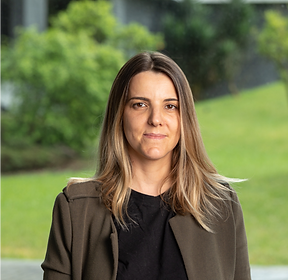
Susana Monteiro
Treasurer
"I'm a neuroimmunologist and the mother of two curious children – and it's with them that I relearn, every day, to marvel at the development of the brain and human behavior. I'm fascinated by how the brain communicates with other systems in the body, particularly the immune system. Understanding the brain requires looking beyond the brain. It was this intersection between neuroscience and immunology that guided my journey and that I now want to bring to EVERYONE. I try to harness the natural curiosity of young children and rekindle it in older children, bringing knowledge in a deconstructed, engaging, and rigorous way, with the mission of contributing to a more informed society. Because only a society that understands can grow in a truly human way."
NeuroTransmission
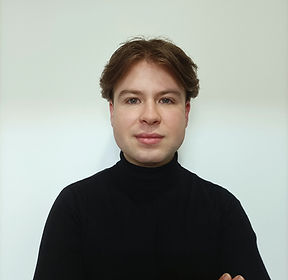
Vítor Gonçalves
"After my academic journey in Health Sciences (MSc), specifically in neuroscience, I realized that although curiosity and desire for knowledge are the driving forces of science, curiosity should not only be cultivated in the laboratory and science has no value if it is not communicated. Currently, my work is motivated by the passion to use my academic knowledge in the accurate communication of science to the general public, in order to promote scientific literacy in Portugal. My approach is dynamic and creative, seeking to make complex ideas accessible and engaging, as I believe that a captivating, visual and interactive approach to teaching produces the best results."
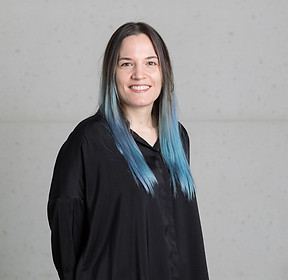
Joana Correia
"I have been curious about science since I was young. My interests lie in the area of neuroscience, understanding how the brain works and showing how science influences our daily lives. I joined the SfN Minho chapter because I believe that science becomes even more powerful when it is communicated clearly, creatively and with empathy. I believe in projects that promote scientific dissemination, bringing science closer to the public, connecting with different communities, as well as helping to promote a more inclusive and diverse neuroscience community. As a professional, I am also enthusiastic about the search for new ideas that improve the way we study and communicate science. My goal is to contribute to a more connected, curious and inclusive (scientific) community, in Minho, in Portugal and beyond."

Beatriz Barros
"The neuroscience bug has been a longtime companion: it introduced me to and guided me through the intricate (almost magical) world of the brain and human behavior, and led me to computational neuroscience. Today, amid neurons, mathematical equations, and algorithms, I try to find and fit together the pieces that make up our brain and allow us to learn and memorize the world around us. And if there's one thing we scientists love to share, it's what we're passionate about and challenged by. It's with this mission that I join SfN – Minho Chapter: to communicate, converse, and deconstruct (neuro)science – and to share this curious bug with the Minho community."
NeurOutreach
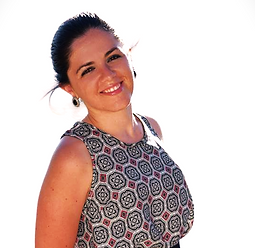
Tatiana Morais
Outreach Manager
"I'm a neuropharmacologist, and I spend my days trying to decipher the patterns of electrical activity that make the brain work, or fail. I want to understand why some people develop neurological diseases and others don't. What differentiates them? What signals does the brain/cell give us before we get sick? I believe that science shouldn't be confined to articles, and therefore, I also dedicate myself to communicating it clearly, accessibly, and passionately. I read at least one book a week. Science, like reading, is a bridge: it connects us to others, broadens our horizons, and changes the way we see the world. Communicating science is about bringing people and knowledge closer together."
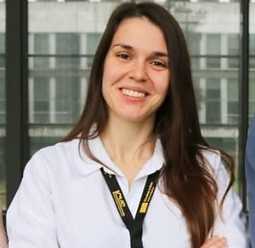
Filipa Antunes
"Since I was little, curiosity has been my driving force — that desire to understand why things happen. Today, as a PhD student in Biomedicine and Health Sciences, this curiosity leads me to explore the world of neurodegenerative diseases. I want to dismantle them piece by piece until they stop being an enigma and, who knows, maybe one day they will become treatable. I believe that science should not be confined to laboratories. I like to transform it into simple conversations, the kind we have at the end of the afternoon with friends, because that is the only way we can build a more informed community that is closer to science, which, after all, is done by all of us."

Bruna Lomba
"My fascination with scientific knowledge began in my childhood, observing and studying other living beings in my grandmother's backyard and watching David Attenborough documentaries. My desire to contribute to human well-being and my fascination with how the brain works grew and led me to research in the field of neuroscience. Scientific communication naturally expanded throughout my learning process and academic career. Currently, I seek to bring science closer to the community, reinforcing the active and indispensable role of scientists in the progress of humanity."
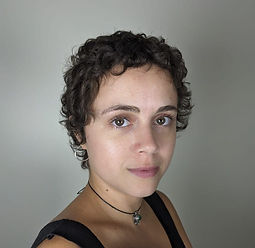
Sara Barsanti
"I'm from Bari, Italy, and I'm currently pursuing a PhD in Biomedicine and Health Sciences in Braga. I study how communication between neurons and astrocytes shapes who we are and what we feel. I believe that scientific communication brings people together—whether it's the curious community in Braga or my family in Italy, who are trying to understand my work. Just as the brain needs different cells to collaborate, science is also enriched when it intersects with art, culture, and education. These exchanges make science more human, creative, and accessible to all."
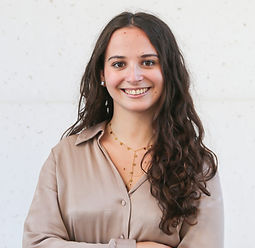
Sara Fernandes
"It was with my family by my side—always curious, but often not quite understanding what I was doing—that I realized a simple truth: science only fulfills its purpose if it is understood by everyone. I grew up among books and laboratories, and today, as a neuroscientist, I study spinal cord injuries—which disrupt communication between our brain and the rest of the body. And that's where I find the perfect metaphor for what I believe: without functional communication, science also fails to move society forward. In a world where poorly founded ideas about the nature, limits, and powers of knowledge proliferate, it's urgent to open the doors of scientific thought to society at large. Especially in neuroscience, where myths still speak louder than facts. I want to help dismantle them, with clarity and passion—because informed common sense is also a force for progress."

Marta Ferreira
"Science has always held a special place in my heart, but it only truly became my passion when I had my first solo experience during my master’s thesis. Neuroscience had always been an area of interest for me, but it was at that moment that I realized, ‘This is what I want to do!’ Today, as a PhD student, I feel the need to challenge myself every day, and communicating science stripped of technical jargon is a major challenge. Science communication that is accessible to the entire population is essential for people to truly understand the greatness of what a scientist does behind a lab coat and a pipette."

Bárbara Pereira
"Desde pequena, sempre me fascinou o funcionamento do corpo humano e, ao longo do tempo, fui-me identificando com a complexidade organizada, quase caótica, do sistema nervoso. Como estudante de mestrado em Ciências da Saúde, tenho agora a oportunidade de explorar o incrível universo do cérebro e de contribuir, ainda que em pequenas partes, para desvendar os seus mistérios. Num tempo em que as doenças neurodegenerativas afetam cada vez mais pessoas, considero essencial reduzir o desconhecimento que as envolve e acredito que, mais do que nunca, comunicar ciência é uma forma de diminuir receios e construir uma sociedade mais informada e preparada."

Melyssa Carvalho
"I'm a master's student in Health Sciences and fascinated by how everything in the body communicates—from the gut to the brain, from the immune response to regeneration… I grew up in Brazil and saw firsthand how scientific knowledge can transform lives, but it's also urgent that it reach the entire community, without barriers. I believe in the power of social media, in-person activities, and art as bridges that connect science to different audiences and generations. We must always strive to show that, although complex, the brain can—and should—be understood by everyone. Deciphering the brain is giving meaning to what we feel, think, and do—and that changes everything."
Partners
.png)
.png)
